


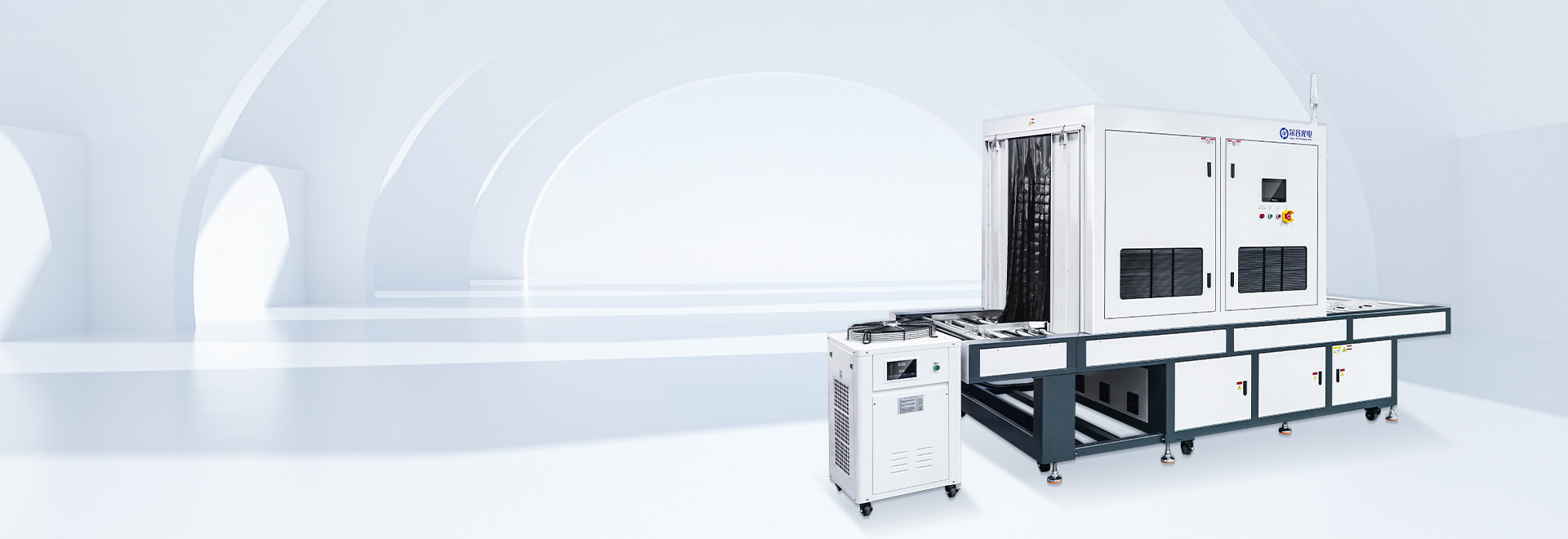


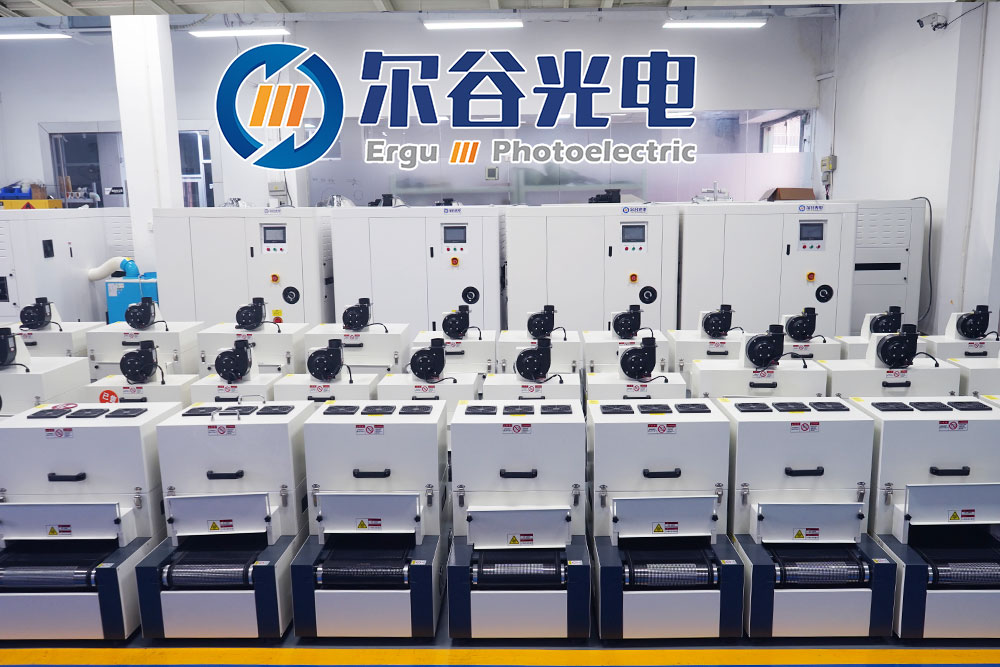
UV LED or mercury lamp? The core of selection is not comparing new versus old, but matching the process. Mercury lamps offer a broad spectrum and high energy density, providing stable deep curing for thick coatings and dark-colored systems, with a lower procurement threshold – but they have obvious thermal effects and require periodic lamp replacement. UV LEDs deliver precise wavelengths, low temperature rise, instant-on capability, and long lifespan, making them suitable for heat-sensitive substrates and precision assembly – but they must match the photoinitiator absorption peak. Ergu Optoelectronics has invested in both product lines. We do not push high-priced solutions; instead, we provide adaptation recommendations based on four dimensions: substrate, production mode, cost cycle, and material formulation. We also support mercury lamp + LED hybrid configurations and light source retrofits for existing production lines.
When manufacturing enterprises choose UV curing equipment, the light source route is the first thing that must be decided: should they choose the emerging UV LED, or the classic high-pressure mercury lamp? Many people easily fall into the debate over “new versus old technology,” assuming that LED must be more advanced. But returning to the essence of production, the answer has never been either/or.
There is no absolutely better light source, only a more suitable wavelength. The two light sources each have clear technical characteristics and suitable scenarios. Matching your own process, materials, and production mode is the core logic of selection.
High-Pressure Mercury Lamps: Broad Spectrum, High Energy, a Mature Choice for Thick Coatings and Dark-Colored Systems
High-pressure mercury lamps are the classic light source for industrial UV curing. They emit light through mercury vapor discharge, outputting a characteristic spectrum covering multiple bands, including multiple curing-related characteristic spectral lines such as 313 nm, 365 nm, and 405 nm. Among these, the energy proportion near 365 nm is the highest. They also cover the UV-A and UV-B ranges, with a spectral width far greater than that of a single LED light source.
The core advantage brought by this broad-spectrum characteristic is strong universality for material formulations. UV coatings, inks, and adhesives from different brands and systems have different photoinitiator absorption peaks. A broad-spectrum mercury lamp can always cover the main absorption bands among them, without needing to adjust the light source for a single material, resulting in high versatility. At the same time, mercury lamps have high energy density and strong photon penetration. For thick coatings and dark-colored systems with high pigment content – such as carbon black inks, highly filled pigmented coatings, and thick adhesive layers – the deep curing effect is more stable, making it a mature solution used in the coating and printing industries for many years.
On the cost side, mercury lamp equipment has a lower one-time procurement threshold, and the cost of replacement lamps is also relatively low, making it friendly to traditional production lines with limited budgets and mature processes.
However, the characteristics of mercury lamps also bring clear limitations. First, the proportion of infrared radiation is high, and the thermal effect is obvious. During curing, the surface temperature rise of the workpiece can reach 40–60°C. For heat-sensitive substrates such as films, flexible printed circuit boards, and precision electronic components, this can easily cause deformation, warping, and damage to component performance. Second, startup requires preheating. It takes several minutes from power-on to reaching stable light output. Frequent switching can significantly shorten lamp life, making it less suitable for intermittent operation. Third, lamp lifespan is typically 800–1,500 hours and requires periodic replacement. Long-term maintenance involves higher consumable and labor costs. Moreover, mercury-containing lamps are hazardous waste, and their disposal must follow corresponding compliance procedures.
UV LED: Precise Single-Wavelength Output, a Cold Light Source for Precision Scenarios
UV LED is a semiconductor solid-state light source that emits ultraviolet light through electroluminescence. Its core features are precise wavelength and concentrated spectrum. Commonly used wavelengths in industrial curing include 365 nm, 385 nm, 395 nm, and 405 nm. The output energy is concentrated near the target wavelength, with little stray light and high photon utilization.
Its first core advantage is low temperature rise – it is a typical cold light source. LED chips generate almost no infrared radiation during light emission. With reasonable thermal design, the surface temperature rise of the workpiece during curing is typically only 5–15°C, far lower than the thermal effect of mercury lamps. For temperature-sensitive workpieces such as FPC flexible printed circuits, optical lenses, microelectronic components, and heat-sensitive films, this fundamentally avoids thermal damage and greatly reduces defect rates caused by thermal deformation.
The second advantage is instant-on capability and fast response. UV LEDs do not require preheating. They reach rated light output the moment power is applied, and switching does not affect light source lifespan. This makes them suitable both for intermittent operation with frequent start-stops and for matching the high-speed takt of automated production lines, enabling on-demand curing with workstation sensing and reducing wasted energy. At the same time, LED light sources typically have a lifespan of over 20,000 hours, more than ten times that of mercury lamps. In long-term continuous production scenarios, consumable replacement costs and downtime losses are greatly reduced.
In addition, the directional emission characteristics of UV LEDs make precise spot control easier. From millimeter-scale point light sources to meter-scale line light sources, energy can be concentrated in the target area, reducing ineffective light spill. This is especially suitable for precision assembly and localized curing, where there are strict requirements on the illumination range.
The main limitation of UV LEDs lies in single-wavelength compatibility. They need to precisely match the photoinitiator absorption peak of the material to achieve ideal results. At the same time, the initial procurement cost of the equipment is higher than that of mercury lamp equipment of the same power, making it more suitable for established mass production process scenarios.
Four Core Dimensions for Selection
There is no need to blindly chase novelty or cling to tradition. By considering four dimensions, you can quickly match a suitable solution.
First, substrate tolerance. For heat-sensitive substrates and precision components, prioritize UV LED to avoid thermal damage. For heat-resistant substrates such as metals and panels, and for thick coatings and dark-colored systems, mercury lamps can be given priority.
Second, production mode. For frequent start-stops and high-mix, low-volume intermittent production, the instant-on capability of UV LED is more suitable. For long-term continuous operation and high-takt mass production of thick coatings, the high energy density of mercury lamps is more advantageous.
Third, cost cycle. For short-term projects with limited budgets, the lower procurement cost of mercury lamps is more suitable. For long-term mass production where full life-cycle O&M costs are calculated, the low energy consumption and long lifespan of UV LEDs are more cost-effective.
Fourth, material formulation. For production lines using multiple general-purpose formulations and frequent material changes, the broad-spectrum adaptability of mercury lamps is stronger. For production lines with established formulations pursuing precise curing efficiency, UV LEDs matched to the corresponding wavelength are more efficient.
As an equipment manufacturer deeply engaged in the UV optics field for fifteen years, Ergu Optoelectronics has invested in both UV LED and traditional high-pressure mercury lamp product lines, covering a full range of models from handheld units to full-line integrated systems. We do not deliberately push high-priced solutions, but always provide adaptation recommendations based on the customer’s real working conditions. For scenarios such as precision electronic assembly and optical processing, we recommend low-temperature-rise, high-precision UV LED solutions. For scenarios such as wood coating, thick-coat building materials, and high-speed printing, we provide mature and stable mercury lamp equipment. We can also provide mercury lamp + LED hybrid configurations according to production line needs, balancing deep curing and surface results. For the upgrade needs of existing mercury lamp production lines, Ergu Optoelectronics also supports light source retrofits and system optimization, helping customers improve curing quality and operating efficiency without significantly modifying the production line.
Ergu Optoelectronics holds 36 related patented technologies. Its core light source modules and control systems are all independently developed, and the entire product series is produced under the ISO 9001 quality management system. Whether it is a classic mercury lamp solution or an emerging LED solution, we use professional optical design and stable product quality to help customers find curing solutions that fit their own processes.
 Wechat friend
 Official Accounts