


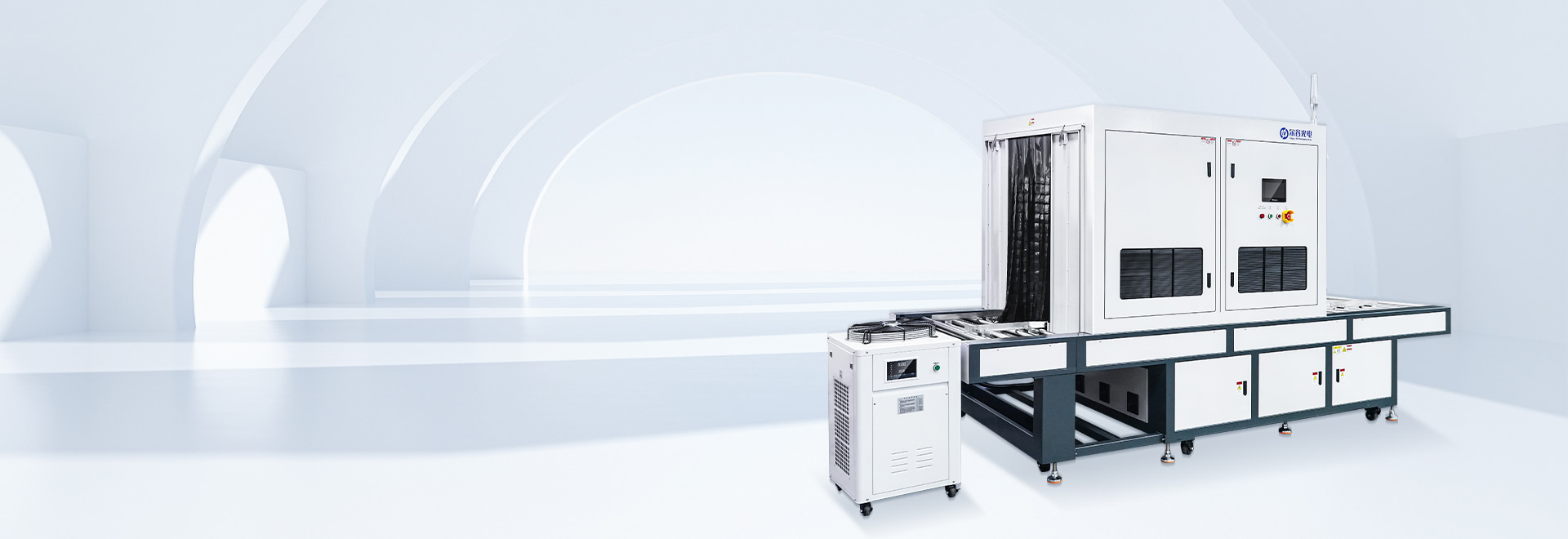
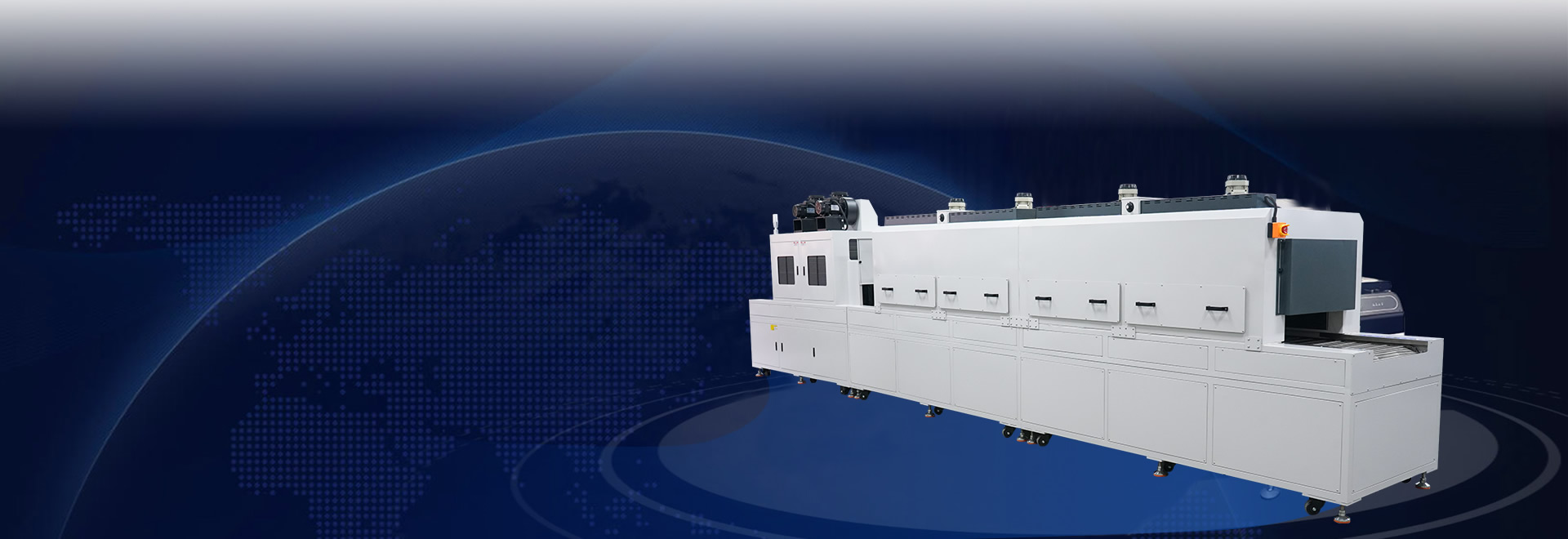

Synopsis: When selecting UV equipment, focusing only on power and price is far from enough – the core value of the equipment lies in precise light distribution, stable light output, and engineering design suited to your operating conditions. Choosing the right type of supplier is more important than comparing parameters. Ergu Optoelectronics has focused on the UV optics field for fifteen years, positioning itself around four core capabilities: R&D, certification, case studies, and customization. We are not a simple equipment assembler, but a maker of UV optical equipment that solves real problems. From standardized models to on-demand customization, we match different process scenarios with professional optical capability.
Main Text:
Many companies buying UV curing equipment for the first time tend to focus on surface parameters such as power, price, and dimensions, thinking that UV equipment is nothing more than “an iron box with a lamp inside” – as long as it lights up, it's fine. But once it's actually put into production, problems emerge: with the same nominal power, someone else's equipment delivers much better curing uniformity; equipment that cost the same amount shows light degradation beyond expectations after just six months; when a special working condition requires a small adjustment, the supplier simply cannot handle it.
There is a saying in the industry that hits the nail on the head: When buying UV equipment, you are not buying lamps – you are buying optical capability. The core value of UV equipment has never been “being able to emit light,” but rather precise light distribution, stable light output, and engineering design that adapts to your working conditions – all of which depend on the supplier's accumulated optical expertise. Therefore, the first step in equipment selection is not to rush into comparing parameters, but to choose the right type of supplier – prioritizing a comprehensive optical manufacturer with R&D, certification, case study, and customization capabilities, rather than a simple equipment assembly shop.
Don't Treat UV Equipment as “a Glowing Iron Box”
To be frank, a standardized assembly model can indeed meet the most basic curing needs: purchase generic light source modules, sheet metal chambers, and standard power supplies, put them together, and you have a piece of equipment that emits light. It is low-cost and delivers quickly, which is perfectly adequate for simple scenarios with low curing requirements.
But the core differences in UV curing lie precisely “beyond the light.” Is the light intensity distribution uniform? Does the wavelength match the material? Is the thermal design reasonable? Is the safety protection adequate? Is long-term light degradation controllable? These are the key factors that directly affect production yield and equipment lifespan – none of which can be solved by simply assembling off-the-shelf parts. Equipment that is merely assembled may not show much difference in simple scenarios, but once it involves precision curing, continuous mass production, or special working conditions, its shortcomings are immediately exposed – uneven curing leads to batch yield fluctuations, insufficient heat dissipation shortens light source life, and missing protection leaves safety hazards. In the end, what you save on procurement costs is more than offset by increased production losses and maintenance expenses.
Ultimately, an assembly shop delivers “equipment that can emit light,” while a comprehensive optical manufacturer delivers “a complete solution that solves your curing problems” – this is the most fundamental difference between the two types of suppliers.
The Four Core Values of a Comprehensive Optical Manufacturer
What truly qualifies a company as a comprehensive optical manufacturer is never low prices, but rather a full-chain capability built around optical technology, concentrated in four dimensions.
Has R&D: From “Assembling Parts” to “Doing Optics”
R&D capability is the foundation of a comprehensive manufacturer and the most essential difference from an assembly shop. What an assembly shop does is piece together ready-made parts. What a comprehensive manufacturer does begins at the optical design stage – designing how the light sources are arranged for the application scenario, selecting the appropriate lens optical path, and optimizing the light-homogenizing structure so that UV light precisely lands on the target area as required, rather than simply lining up LED beads and calling it done.
In addition, heat dissipation structures, drive circuits, and control logic all require targeted R&D to ensure long-term stability of light output. For example, with the same 365 nm light source, a comprehensive manufacturer will balance and optimize three core indicators – curing depth, uniformity, and temperature rise – rather than relying on simply adding more LED beads to stack up power.
Ergu Optoelectronics has been deeply engaged in the UV optics field for fifteen years, holding 36 related patents. The core optical path design, heat dissipation structure, and control solutions are all independently developed. From the focusing lens design of point light sources to the uniform light array structure of area light sources, from closed-loop light intensity control to multi-stage power matching logic, these are all results iterated through numerous projects – completely different from piecing together off-the-shelf parts.
Has Certifications: From “Lights Up When Powered” to “Systematic Quality Control”
The long-term stability of equipment does not depend on whether it lights up at the moment it leaves the factory, but on full-process quality management. Comprehensive optical manufacturers typically have established complete quality management systems, and every unit undergoes standardized inspection procedures before shipping – irradiance uniformity calibration, 72-hour continuous aging tests, safety interlock function verification, electrical performance testing – with data records for each item.
At the same time, products pass authoritative certifications such as CCC and CE, and special models such as explosion-proof and clean-type equipment comply with corresponding industry standards and specifications, with verifiable certifications and traceable testing. In contrast, many assembly-model manufacturers only do basic power-on testing and lack a complete quality control process. The equipment may work in the short term, but stability and consistency during long-term continuous operation are not guaranteed.
Has Case Studies: From “Parameters on Paper” to “Proven Experience in the Field”
Whether UV equipment works well is never fully reflected in a parameter sheet; hands-on industry experience is extremely important. The electronics industry requires strict control of substrate temperature rise, chemical processing requires explosion-proof and anti-corrosion designs, trenchless rehabilitation must adapt to humid underground environments, and the printing industry must match high-speed production cycles – different industries have vastly different process details and working condition pain points. Without solid case experience, it is difficult to produce equipment that is truly suitable.
Comprehensive manufacturers have served a large number of customers across different industries and accumulated rich scenario cases. They know where the core demands of different processes lie, can avoid common pitfalls in advance, and provide solutions that are more practical, saving customers from having to make their own mistakes through trial and error. Ergu Optoelectronics' customers span multiple fields including electronics manufacturing, printing and packaging, building material coating, chemical photochemical reactions, and municipal trenchless rehabilitation. We have corresponding implementation experience for the curing needs of different scenarios and can provide customers with more pragmatic selection advice, rather than simply copying generic parameters.
Has Customization: From “You Accommodate the Equipment” to “The Equipment Adapts to You”
Standardized equipment can only cover general scenarios, but in actual production, line heights, workpiece geometries, site space, and process cycle times all vary. If you force a standardized piece of equipment, you often need to modify your production line and adjust your process to accommodate the equipment – the so-called “cutting the foot to fit the shoe.”
Comprehensive optical manufacturers have customization capabilities and can adjust equipment dimensions, light source angles, conveying methods, and control logic according to the customer's actual working conditions, allowing the equipment to proactively integrate with the existing line and reducing the burden on the enterprise to adjust its production layout to fit the equipment. Everything from small changes such as modifying an interface dimension or adding side light sources, to the custom design of an entire curing line, can be delivered on demand. Manufacturers focused on assembly typically only make standardized models and have weak customization capabilities, leaving very limited room for adjustment.
Several Quick Dimensions for Judging Suppliers During Selection
If you want to quickly distinguish supplier types during selection, don't get caught up in complicated concepts – just look at a few practical actions: Can they provide optical-level adaptation suggestions for your specific process, rather than just quoting power and price? Can they present implementation cases from the same industry and process? Can they issue complete factory inspection reports? Can they support targeted custom adjustments? If they cannot do any of these, they are most likely just an equipment assembly shop.
Let's return to the original statement: When buying UV equipment, you are not buying lamps – you are buying optical capability. On the surface, all UV equipment emits light, but behind that is a comprehensive gap in optical path design, quality control systems, industry experience, and customization capabilities. For enterprises that require stable mass production and controllable quality, prioritizing a comprehensive optical manufacturer may involve a slightly higher initial investment, but in the long run, whether in terms of production yield, equipment lifespan, or operating and maintenance costs, it will prove to be the better choice.
As a comprehensive manufacturer deeply rooted in the UV optics field, Ergu Optoelectronics always adheres to R&D as the core, quality control as the foundation, case studies as support, and customization as a distinguishing feature. We do not engage in simple equipment assembly; we focus on making UV optical equipment that solves real problems. Whether it is a standard model or a customized solution, we use professional optical capability to help customers achieve stable and reliable curing production.
 Wechat friend
 Official Accounts