


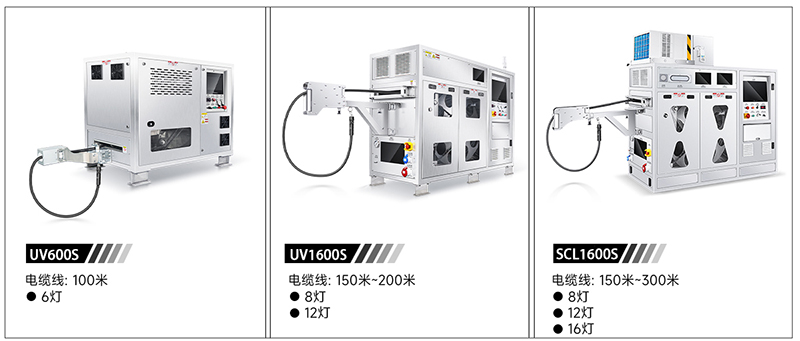
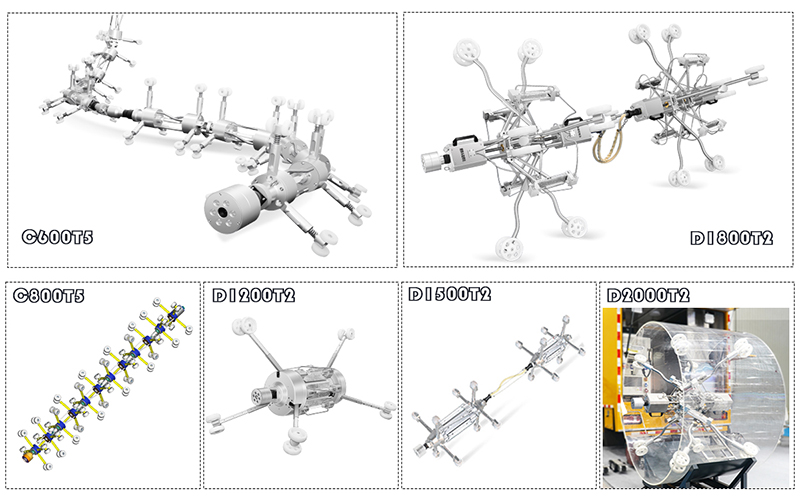
Introduction: No excavation, no road closures, no disruption – CIPP UV curing trenchless rehabilitation technology is becoming the mainstream choice for urban pipeline network renewal. Ergu Optoelectronics' trenchless UV curing system consists of four major modules working in coordination: the light chain, cable reel, intelligent control unit, and monitoring unit. It accommodates pipe diameters from DN250 to DN2000. With professional equipment, we serve as the "minimally invasive repair specialist" for urban pipelines, rejuvenating underground lifelines.
Main Text:
Urban underground pipeline networks are like the city's "underground blood vessels." In recent years, a large number of pipelines have reached the stage where they need repair or replacement, but the traditional "open-cut" excavation repair method – which blocks traffic, damages road surfaces, and takes a long time – is becoming increasingly unworkable in built-up areas.
Trenchless rehabilitation technology, represented by CIPP UV curing, has gradually become mainstream – no road excavation, short construction periods, and reliable structural performance. The core equipment in the entire process is the trenchless UV curing system. It acts like a "minimally invasive repair specialist" for pipeline networks, completing the in-situ formation of a new liner pipe within the limited underground space and giving old pipes a new lease on life.
What role does UV curing play in the trenchless rehabilitation process?
A complete CIPP UV curing rehabilitation is a continuous underground construction process:
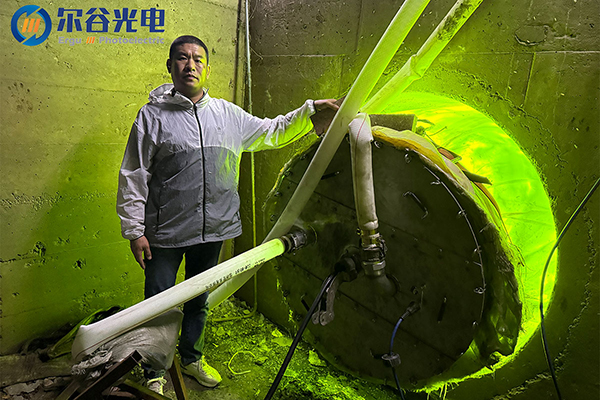
First, the old pipe is cleaned, pre-treated, and inspected with CCTV. Then, a glass fiber hose impregnated with photosensitive resin is pulled into the pipe section to be repaired using a winch. The hose is inflated so that it expands and presses tightly against the inner wall of the pipe, forming the initial shape of the liner. Next, the UV curing light chain is placed into the pipe and moves forward at a constant speed, with ultraviolet light continuously irradiating the liner, triggering resin crosslinking and polymerization. The flexible hose gradually hardens into a new liner pipe with independent structural strength, forming a high-strength "pipe-within-a-pipe" inside the old pipe.
The UV curing step is the core forming stage of the entire process – whether the curing is uniform, whether the structural strength is sufficient, and whether the service life is long all depend on this step. Compared with curing methods such as hot water and steam, UV curing offers controllable process conditions and high forming uniformity, with no large-volume wastewater discharge during construction and minimal disturbance to the surrounding environment. It is particularly suitable for urban arterial roads, residential areas, commercial districts, and other areas sensitive to construction impacts.
Four core units working in coordination to form a complete curing operation system
A mature trenchless UV curing system is not a single light-emitting device, but is composed of four major modules working in coordination: the UV curing light chain, cable reel, intelligent control system, and pipeline monitoring unit.
The UV curing light chain is the core workhorse. It is composed of multiple independent UV lamp groups connected in series, with directional reflective structures on the outside of the lamp groups that can evenly project ultraviolet light across a 360° range onto the inner pipe wall, ensuring consistent light exposure in all directions for the liner resin. The light chain as a whole has a certain degree of flexibility and maneuverability, allowing it to adapt to slight pipe deformation and small-angle bends, and handle the complex conditions of aging domestic pipeline networks without issue.
The cable reel serves as the transmission link for power and signals. It provides stable power to the light chain while synchronously reeling in and out the power and signal cables in coordination with the light chain's travel speed, ensuring stable power supply and smooth signal transmission during operation without cable dragging or tangling that could disrupt the construction rhythm.
The intelligent control system is the "command center" of the entire system. Construction personnel can set the lamp group output power and light chain travel speed in advance based on pipe diameter, liner wall thickness, and resin characteristics. During the curing process, the system collects real-time operating parameters such as power, temperature, and travel speed to ensure the curing energy stably matches the design requirements. The system is also equipped with safety mechanisms such as overload protection and temperature warnings, enabling timely response to construction anomalies.
The pipeline monitoring unit serves as the "visual eye" underground. A high-definition camera module mounted at the front of the light chain transmits real-time images of the pipe interior back to the surface control console. Construction personnel can directly observe the fit of the liner hose and the curing progress, promptly detect anomalies such as bulges and wrinkles, and dynamically adjust construction parameters to ensure repair quality from the process side.
Core design features of the Ergu Optoelectronics system
With fifteen years of experience in the UV optics field and an understanding of actual domestic pipeline conditions, Ergu Optoelectronics has implemented several targeted optimizations for its trenchless UV curing system, focusing on three directions: curing quality, adaptability flexibility, and construction convenience.
First, specialized optimization for curing uniformity. The reflector structures of the lamp groups have been designed through optical simulation, resulting in more uniform circumferential light intensity distribution and reduced differences between localized under-curing and over-curing. Multiple lamp groups are arranged in a staggered pattern to compensate for illumination blind spots at the gaps between lamp groups, ensuring curing consistency along the entire pipe section. Uniform curing is the foundation for stable structural strength of the liner pipe and also reduces the risk of future leakage caused by uneven curing.
Second, flexibly adjustable output parameters. The lamp groups support stepless power adjustment, and the travel speed can be continuously set within a certain range, allowing curing parameters to be flexibly matched according to different resin systems, liner wall thicknesses, and pipe diameters. The same equipment can accommodate multiple specifications of rehabilitation projects, eliminating the need to purchase dedicated equipment for a single working condition and improving overall equipment utilization.
Third, portable construction design. The system adopts a modular split design, allowing core units to be independently disassembled and transported. No large lifting equipment is needed for site entry and positioning, making it especially suitable for locations inaccessible to large work vehicles, such as old city streets and residential community interiors. The equipment assembly and commissioning process is simple, allowing construction teams to quickly complete site preparation and shorten the project's preliminary preparation period.
Customized solutions and supporting construction process support
Domestic pipeline networks span a wide range of diameters, from small branch pipes of a few hundred millimeters to municipal trunk mains of several meters, with repair lengths ranging from tens of meters to over a hundred meters. Standardized equipment can hardly cover all cases. Ergu Optoelectronics can provide customized light chain configuration solutions based on the customer's business scope: different pipe diameter ranges are matched with corresponding numbers and powers of lamp groups to ensure appropriate light coverage and energy density; different repair lengths are paired with corresponding cable reel and control system specifications to meet the continuous curing needs of long-distance pipelines.
In addition, we provide free construction process support to partner customers. In the early project stage, we assist customers in calculating reasonable curing parameters and construction plans based on pipe parameters and repair requirements. During the project implementation stage, we provide systematic equipment operation training and on-site process guidance to help construction teams quickly master equipment operation and parameter adjustment techniques. When technical problems arise during construction, the technical team provides remote support at any time to assist in troubleshooting and resolution.
The renewal and maintenance of urban underground pipeline networks is a livelihood project that ensures the smooth operation of cities. As a UV equipment manufacturer, we always believe that reliable engineering equipment is the fundamental basis for construction quality. In the future, Ergu Optoelectronics will continue to deepen its work in trenchless rehabilitation scenarios, refine UV curing systems better suited to local working conditions, and serve as a behind-the-scenes repairer of urban pipeline networks with professional equipment and services, contributing to the quality improvement and upgrading of municipal infrastructure.
 Wechat friend
 Official Accounts